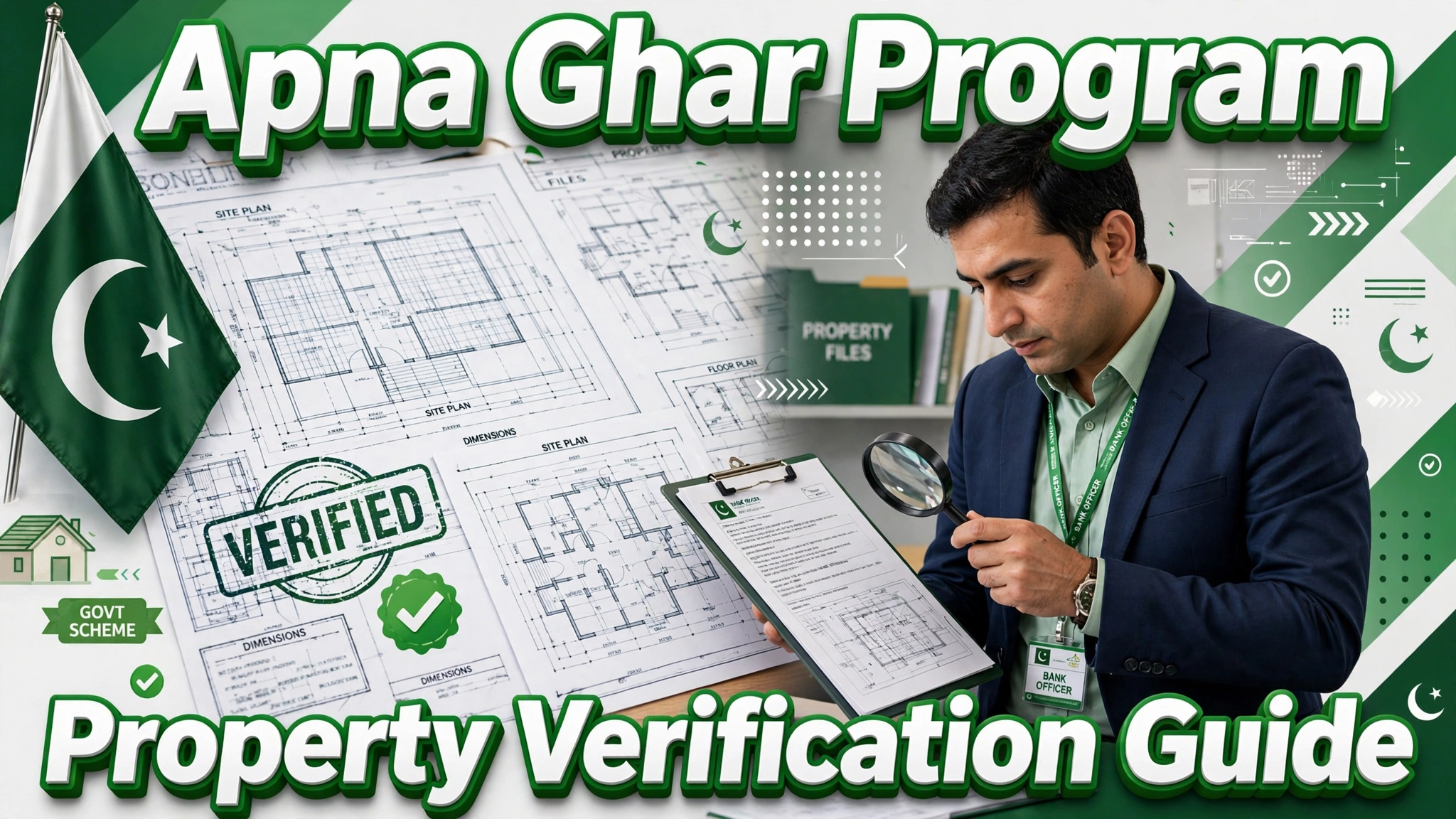
Before any bank releases housing finance, it must be certain the property itself is genuine, dispute-free, and worth the loan amount. That is what Apna Ghar Program property verification is all about — and it is the stage where many applications face their toughest test. In this complete guide, we explain what property verification involves, each step of the process, the documents you need, how long it takes, why verifications fail, and answers to frequently asked questions.
What Is Property Verification?
Property verification is the bank’s independent investigation of the house or plot you want to finance. The bank checks three things: ownership (does the seller legally own it?), value (is it worth what you claim?), and condition (does the physical property match the papers?). Only after all three check out does the bank approve disbursement. This applies whether you’re buying a ready house (see our house purchase guide) or building on a plot (see plot construction guide).
Property Verification Steps
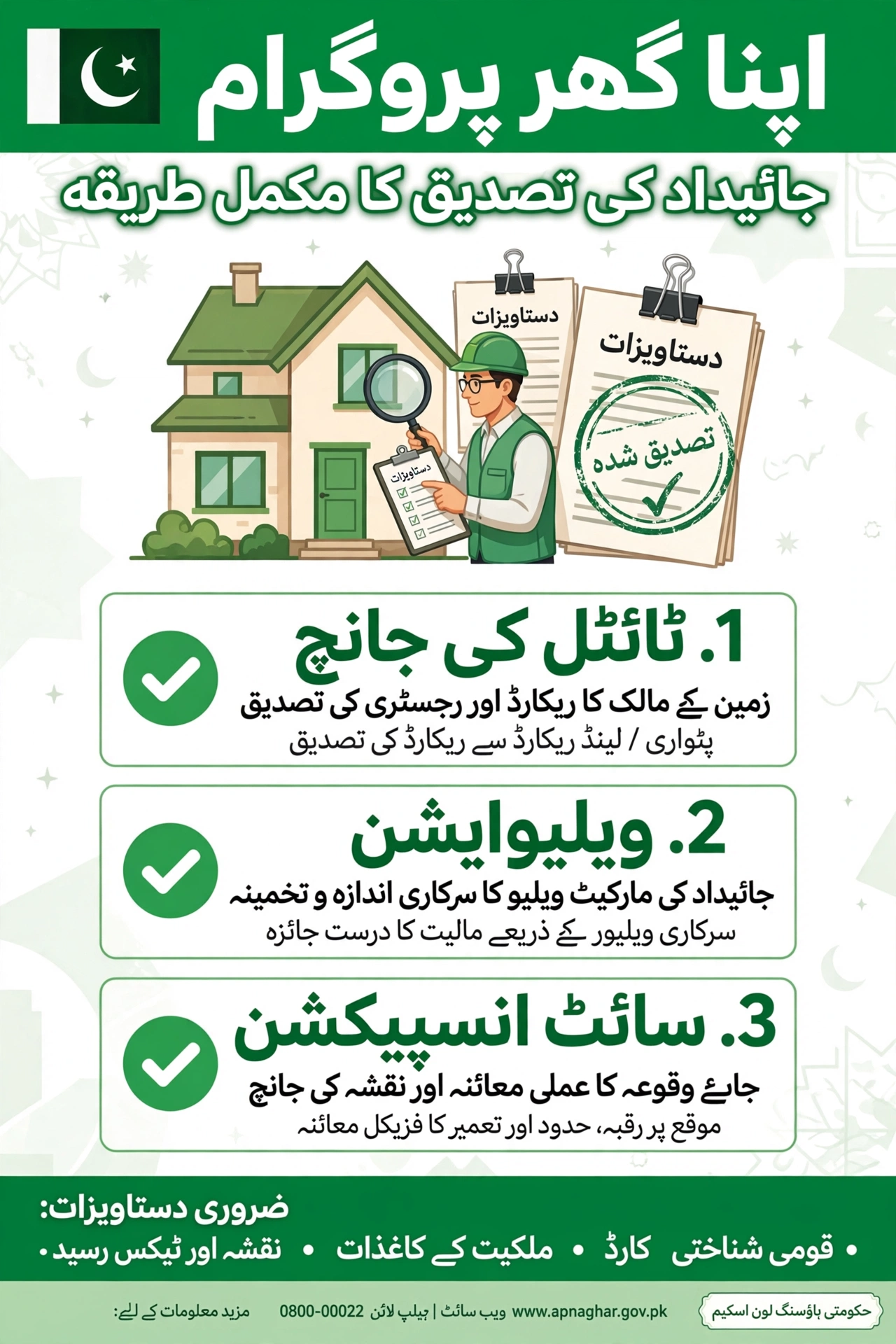
1. Title and Ownership Check
The bank’s legal team examines the property’s ownership chain: registry (sale deed), fard-e-malkiat, and mutation records from the land revenue department. They confirm the seller is the true owner and that the title is clear of disputes, court cases, or competing claims.
2. Property Valuation
An independent valuer from the bank’s approved panel visits the property and estimates its fair market value. The loan amount is based on this valuation — not on the price you agreed with the seller. If the valuation comes in lower, the bank finances the lower figure.
3. Site Inspection
A physical visit confirms the property exists as described: correct location, dimensions, boundaries, and construction status. For under-construction properties, inspectors verify the approved building plan and construction stage.
4. Legal and Regulatory Clearance
The bank confirms there are no mortgages, liens, unpaid taxes, or development-authority violations attached to the property. Properties in approved housing societies clear this step fastest.
Documents Needed for Property Verification
- Registry / sale deed — proof of ownership transfer to the seller.
- Fard-e-malkiat — current ownership record from the land revenue department.
- Mutation (intiqal) records — showing the ownership chain.
- Approved building plan / map — for houses and construction cases.
- Seller’s CNIC copy — to confirm the seller’s identity matches the records.
- Tax receipts — property tax paid up to date, where applicable.
- Society NOC / allotment letter — for properties in housing societies.
How Long Does Property Verification Take?
| Step | Typical Timeline |
|---|---|
| Document collection | 3–7 days (depends on you and the seller) |
| Title and legal check | 1–2 weeks |
| Valuation visit and report | 1 week |
| Site inspection | 3–5 days |
| Final clearance and approval | 1 week |
Total: roughly 4–6 weeks if documents are complete — much longer if the title has issues. Track your progress with our application tracking guide.
Common Reasons Property Verification Fails
- Disputed title — ongoing court cases or competing ownership claims over the property.
- Unapproved construction — building without an approved map from the development authority.
- Property already mortgaged — an existing loan or lien the seller didn’t disclose.
- Fake or forged documents — instantly kills the application and can lead to legal action.
- Valuation far below asking price — the bank won’t finance more than the property is worth.
- Agricultural or restricted land — land not approved for residential use can’t be financed.
- Seller uncooperative — if the seller won’t provide documents or allow inspection, verification stalls.
FAQs – Apna Ghar Program Property Verification
Who conducts the property verification?
Your financing bank — through its legal team, panel valuers, and inspection officers. You don’t hire them; the bank arranges it.
Do I have to pay for verification?
Valuation and legal verification charges are typically borne by the applicant and are usually non-refundable, even if the loan isn’t approved.
Can I choose the property before loan approval?
Yes — most applicants identify the property first, then the bank verifies it as part of the loan process.
What happens if the valuation is lower than the agreed price?
The bank finances based on its valuation. You’d need to cover the difference yourself or renegotiate with the seller.
Is verification needed for plot construction too?
Yes — the plot’s ownership and the approved construction plan are both verified before disbursement.
Can a disputed property ever be financed?
No — banks will not finance properties with unclear or disputed titles. Resolve disputes first, then apply.
How can I speed up verification?
Have complete, genuine documents ready before applying, choose properties in approved societies, and cooperate promptly with the bank’s valuers.
Final Thoughts
Apna Ghar Program property verification protects both you and the bank — it ensures you’re buying a genuine, dispute-free property worth the money. Do your own homework on the title before applying, keep every document ready, and this critical stage will pass without surprises.