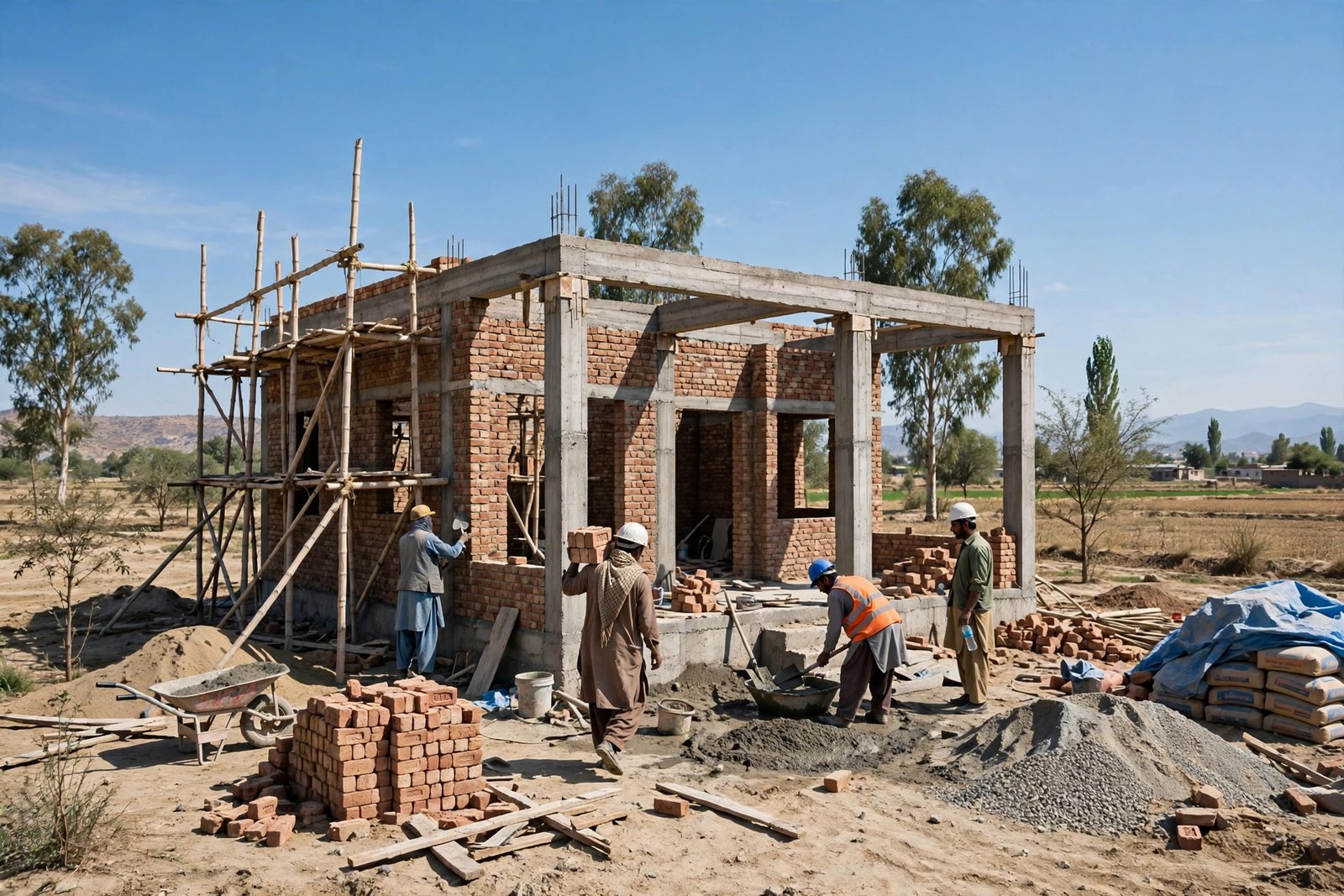
Can You Use the Apna Ghar Program for House Construction?
Yes. While most people associate the Wazir-e-Azam Apna Ghar Program 2026 with buying a ready-made house or flat, the scheme also supports applicants who already own a residential plot and want to build their home on it. In that case you apply for house construction finance instead of a purchase loan. The bank evaluates your plot documents and construction plan and, once approved, the financed amount is typically released in stages as construction progresses, with each stage verified before the next payment. For full financing terms, see our Apna Ghar Program loan guide.
Eligibility Criteria for House Construction Applicants
Construction applicants must meet the program’s standard eligibility conditions, plus a few plot-specific requirements:
- Pakistani citizen holding a valid CNIC.
- Plot ownership: the residential plot must be in the applicant’s own name with a clear, dispute-free title (fard, registry or intiqal).
- First-time homeowner: the program targets applicants who do not already own a house.
- Residential land: the plot should be designated residential, ideally in an approved housing scheme or municipal area with verifiable land records.
- Approved construction plan: most banks require a map or plan approved by the relevant development authority before disbursing construction finance.
- Age and income: you must fall within the bank’s eligible age bracket and show enough verifiable income to afford the monthly instalments.
Read our detailed Apna Ghar Program eligibility criteria guide for the complete list of conditions.
Key Features of Construction Finance
House construction finance under the program generally works like this:
- Financing amount: finance of up to Rs 10 million is available under the program, depending on your eligibility and the bank’s assessment.
- Subsidised markup: the program offers markup rates below ordinary market rates, which keeps monthly instalments affordable.
- Long repayment tenure: extended repayment periods help keep instalments manageable for salaried and self-employed applicants.
- Staged disbursement: instead of one lump sum, the amount is released in stages linked to construction milestones, verified by the bank.
Compare participating banks and their terms in our updated list of Apna Ghar Program banks in Pakistan.
Documents Required for a Construction Application
Keep these documents ready before you apply — incomplete files are the most common reason for delays:
- CNIC copies of the applicant (and spouse, if required by the bank).
- Plot ownership documents: fard-e-malkiat, registered sale deed or intiqal.
- Approved construction map or plan from the development authority or municipal committee.
- Construction cost estimate prepared by a contractor or engineer.
- Proof of income: salary slips, bank statements or business income records.
- Recent photographs of the plot.
Our documents verification guide explains each requirement and the mistakes that cause rejections.
Step-by-Step Application Process
- Confirm your eligibility. Match yourself against the criteria above and the detailed eligibility guide.
- Choose a participating bank. Compare markup rates, processing fees and disbursement timelines before deciding.
- Prepare your file. Gather CNIC, plot papers, approved map, cost estimate and income proof in one complete file.
- Submit the application. Apply through the bank’s branch or the online portal by following our Apna Ghar Program online registration guide.
- Verification and plot inspection. The bank verifies your documents and typically inspects the plot before approval.
- Approval and staged disbursement. After approval, funds are released stage by stage as construction advances.
- Complete construction within the timeline agreed with the bank.
Common Mistakes to Avoid
- Applying with a disputed plot title or incomplete ownership documents.
- Starting construction without an approved map, then seeking finance later.
- Underestimating the construction cost, which stalls the project midway.
- Submitting applications to several banks at the same time, which can complicate verification.
Frequently Asked Questions
Can I apply if the plot is in my father’s name?
As a rule the plot must be owned by the applicant. If it is currently in a family member’s name, have the ownership legally transferred to your name before applying.
Is the markup really subsidised?
Yes, the program is designed around below-market, subsidised markup rates. Exact rates vary by bank and applicant profile, so confirm the current offer with your chosen bank.
How is the construction loan disbursed?
In stages tied to construction progress. The bank verifies each completed stage — for example foundation, structure and finishing — before releasing the next instalment.
Can I build in a rural area or village?
It depends on whether the bank can verify the plot’s ownership records in that area. Plots with clear, verifiable documentation stand the best chance.
Where do I submit my application?
Through a participating bank’s branch or the program’s online portal. Our registration guide walks you through the online method.
Final Words
If you already own a plot, the Apna Ghar Program can turn it into your own home through subsidised construction finance. Get your ownership documents and approved plan in order, pick the right bank, and follow the application process step by step. For related help, browse our guides on eligibility, documents and online registration. Always verify final terms on the official portal or with your bank before applying.